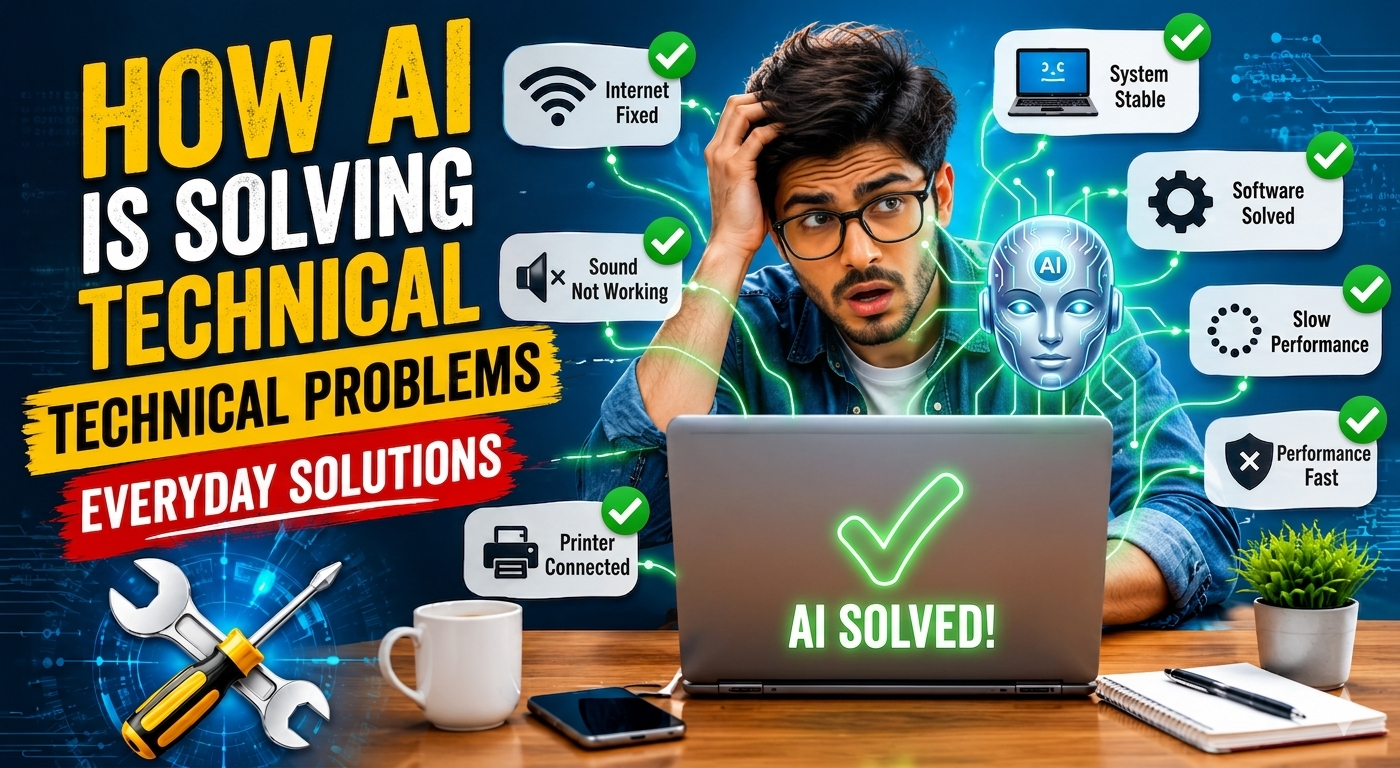
Artificial Intelligence (AI) is no longer just a futuristic concept—it is now a practical tool used in everyday technology. From smartphones and laptops to cloud systems and customer support platforms, AI is actively helping users solve technical problems faster and more efficiently.
Whether it’s fixing software errors, improving internet performance, or detecting security threats, AI is changing how we handle everyday technical issues.
1. AI in Automated Troubleshooting
One of the biggest contributions of AI is automated problem detection and fixing.
How It Works:
- AI monitors system performance in real time
- Detects unusual behavior or errors
- Suggests or applies fixes automatically
Examples:
- Windows automatic troubleshooting tools
- Smart diagnostics in smartphones
- Cloud system self-repair mechanisms
This reduces the need for manual troubleshooting.
2. AI Fixing Network and Internet Issues
AI is widely used in network management systems.
What AI Does:
- Detects slow internet speeds
- Identifies router or ISP issues
- Optimizes network traffic
- Suggests performance improvements
Real-World Use:
- Smart Wi-Fi routers adjusting signal strength
- Telecom companies using AI for outage detection
- Apps that optimize bandwidth usage
AI helps maintain faster and more stable internet connections.
3. AI in Cybersecurity Protection
Cybersecurity is one of the most important areas where AI plays a major role.
AI Can:
- Detect malware and viruses in real time
- Identify phishing attacks
- Block suspicious login attempts
- Monitor unusual system behavior
AI-based security systems act faster than traditional antivirus tools.
4. AI in Fixing Software Errors and Crashes
Software crashes are common, but AI helps reduce them.
How AI Helps:
- Analyzes crash reports
- Identifies root causes of bugs
- Suggests patches or updates
- Predicts potential failures
Many modern applications use AI to improve stability and performance.
5. AI-Powered Virtual Tech Support
AI chatbots and assistants are replacing traditional customer support in many cases.
Examples:
- Chatbots for troubleshooting
- Voice assistants like Siri or Google Assistant
- Automated IT support systems
Benefits:
- Instant responses
- 24/7 availability
- Step-by-step troubleshooting guidance
Users can solve many problems without waiting for human support.
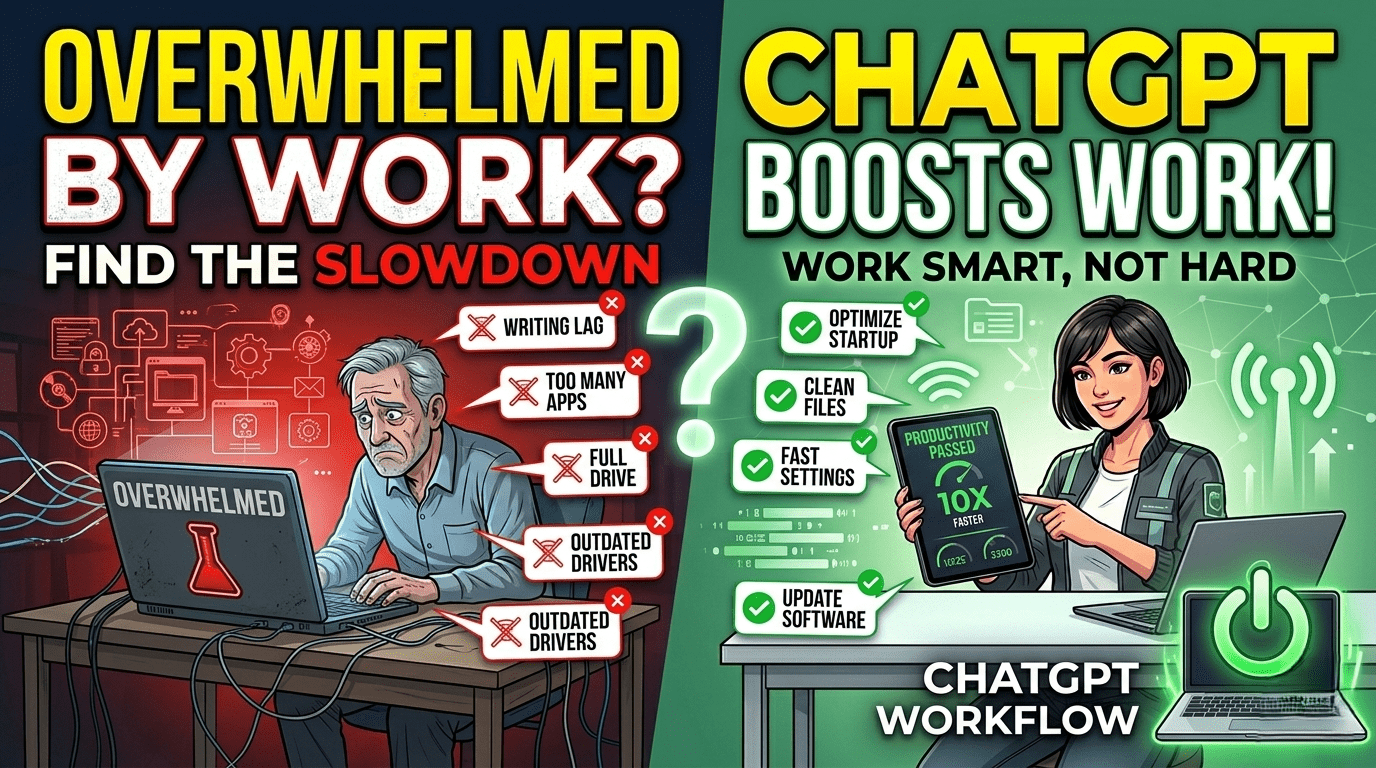
6. AI in Device Performance Optimization
AI helps devices run faster and smoother.
What It Does:
- Closes unnecessary background apps
- Manages memory usage
- Optimizes battery consumption
- Improves CPU performance
Example:
Smartphones automatically adjusting performance based on usage patterns.
7. AI in Data Recovery and File Management
AI is improving how lost or corrupted files are recovered.
AI Capabilities:
- Predicts recoverable file structures
- Scans storage more efficiently
- Improves accuracy of file restoration
This makes data recovery faster and more successful.
8. AI in Predictive Maintenance
AI can detect problems before they happen.
Examples:
- Warning about failing hard drives
- Detecting overheating components
- Predicting battery degradation
- Identifying system instability early
This prevents major technical failures.
9. AI in App and System Updates
AI helps manage updates more intelligently.
What AI Does:
- Suggests optimal update times
- Installs critical patches automatically
- Prevents compatibility issues
- Improves system stability
This reduces user effort and system downtime.
10. AI in Everyday User Experience
AI is integrated into daily digital life without users even noticing.
Examples:
- Spam filters in email
- Smart autocorrect in keyboards
- Voice-to-text systems
- Smart recommendations in apps
These features silently solve small technical problems every day.
Benefits of AI in Technical Problem Solving
Faster Solutions
AI identifies and resolves issues in seconds.
Reduced Human Effort
Less manual troubleshooting is required.
Improved Accuracy
AI detects hidden issues that users may miss.
24/7 Support
AI systems work continuously without downtime.
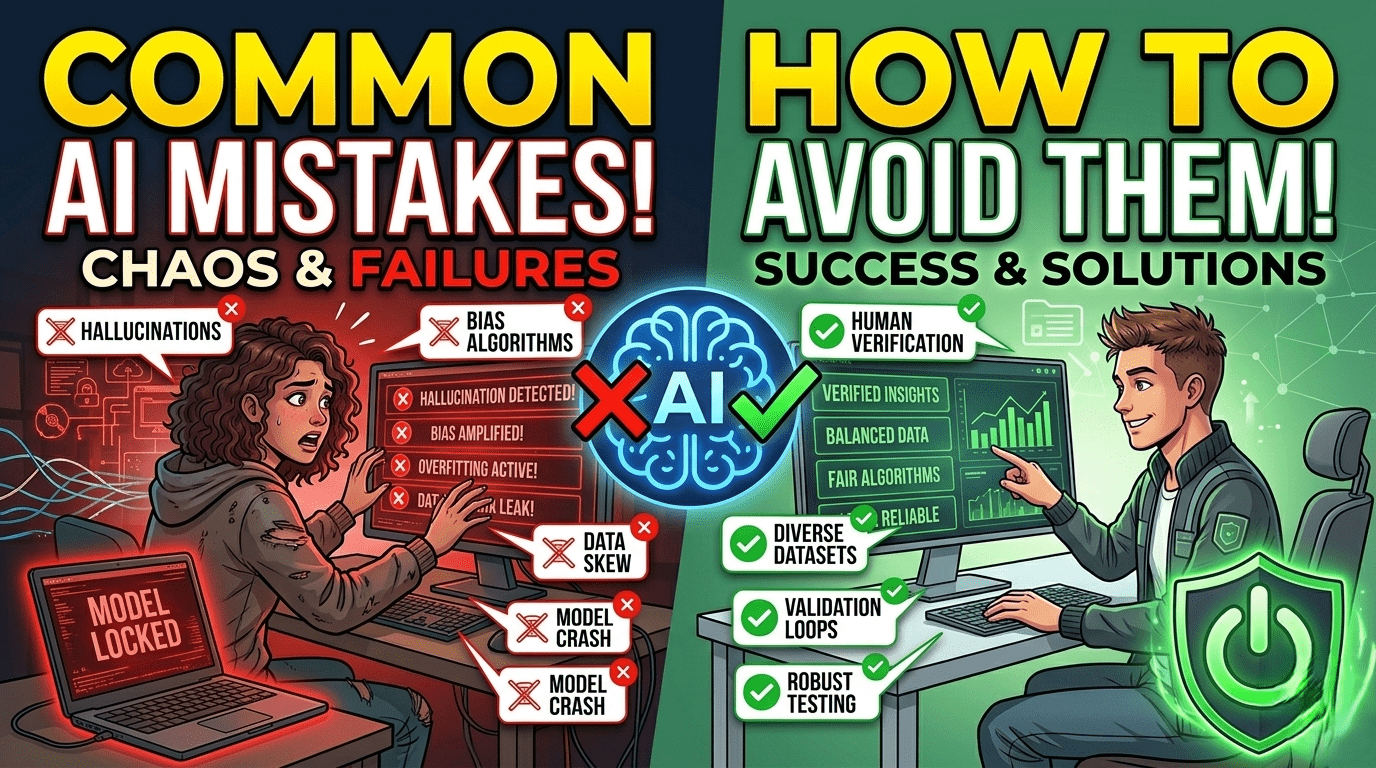
Challenges of AI in Technical Support
Despite its advantages, AI has limitations:
- May misdiagnose complex problems
- Requires large amounts of data
- Cannot fully replace human expertise
- Privacy concerns in data usage
Human supervision is still important in complex situations.