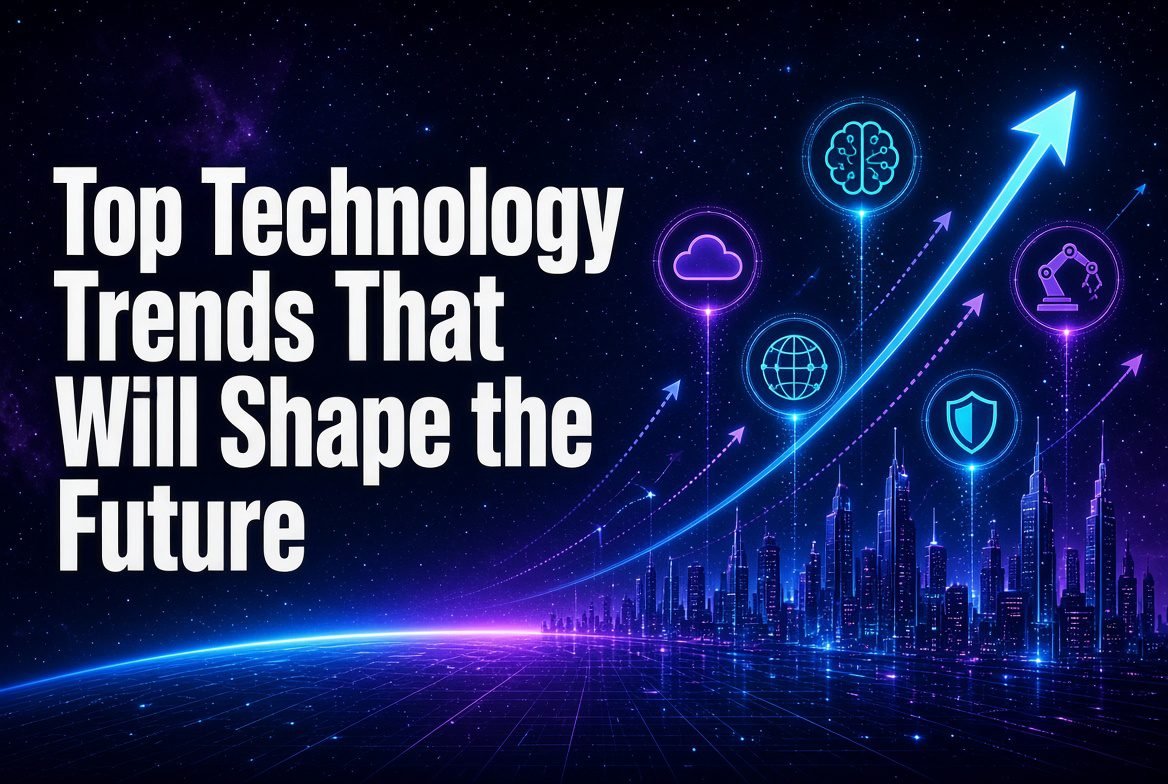
Technology is evolving faster than ever before. Innovations that once seemed like science fiction are now becoming part of everyday life. From artificial intelligence to smart cities, the next decade will bring massive changes in how we live, work, and communicate.
Understanding these top technology trends that will shape the future can help you prepare for new career opportunities, business shifts, and lifestyle changes.
Why Future Technology Trends Matter
Following tech trends helps you:
- Stay competitive in the job market
- Prepare for new careers
- Understand industry changes
- Improve business decisions
- Adapt to digital transformation
- Learn skills that will be in demand
The future belongs to those who stay informed.
15 Top Technology Trends That Will Shape the Future
1. Artificial Intelligence (AI)
Artificial Intelligence is transforming everything from healthcare to education and business automation.
AI is being used for:
- Chatbots and virtual assistants
- Content creation
- Data analysis
- Self-driving systems
- Smart recommendations
AI will continue to become more powerful and integrated into daily life.
2. Machine Learning and Deep Learning
Machine learning allows systems to learn from data without being explicitly programmed.
It powers:
- Fraud detection
- Voice recognition
- Recommendation systems
- Predictive analytics
As data grows, ML will become even more important.
3. Robotics and Automation
Robots are increasingly used in:
- Manufacturing
- Warehousing
- Healthcare
- Agriculture
Automation will replace repetitive tasks and increase efficiency in many industries.
4. Quantum Computing
Quantum computing uses quantum physics to solve problems far beyond the capability of traditional computers.
Potential uses include:
- Drug discovery
- Cryptography
- Climate modeling
- Complex simulations
It is still developing but has massive future potential.
5. Internet of Things (IoT)
IoT connects everyday devices to the internet.
Examples include:
- Smart homes
- Wearable devices
- Smart cars
- Connected factories
IoT will make environments more intelligent and automated.
6. 5G and Future Connectivity
5G networks offer:
- Faster internet speeds
- Lower latency
- Improved connectivity for devices
This will support technologies like autonomous vehicles and smart cities.
7. Cybersecurity Advancements
As technology grows, so do cyber threats.
Future cybersecurity will focus on:
- AI-based threat detection
- Zero-trust systems
- Biometric authentication
- Advanced encryption
Security will be critical for all digital systems.
8. Blockchain Technology
Blockchain is a decentralized digital ledger used for secure transactions.
It is used in:
- Cryptocurrencies
- Supply chain tracking
- Smart contracts
- Digital identity
Blockchain may reshape financial and business systems.
9. Augmented Reality (AR) and Virtual Reality (VR)
AR and VR are changing how people interact with digital environments.
They are used in:
- Gaming
- Education
- Training simulations
- Virtual meetings
The metaverse concept is built around these technologies.
10. Cloud Computing
Cloud computing allows users to store and access data online.
Benefits include:
- Scalability
- Remote access
- Cost efficiency
- Collaboration tools
It is essential for modern businesses.
11. Edge Computing
Edge computing processes data closer to where it is generated.
This reduces:
- Latency
- Bandwidth usage
- Response time
It works alongside IoT and AI systems.
12. Biotechnology and Health Tech
Technology is transforming healthcare through:
- Genetic engineering
- AI diagnostics
- Wearable health devices
- Personalized medicine
This will improve disease detection and treatment.
13. Self-Driving Vehicles
Autonomous vehicles use AI, sensors, and cameras to navigate roads.
They aim to improve:
- Road safety
- Traffic efficiency
- Transportation costs
Still developing, but rapidly advancing.
14. Sustainable and Green Technology
Future technology focuses on environmental sustainability:
- Renewable energy
- Electric vehicles
- Smart energy grids
- Carbon reduction systems
Green tech is essential for combating climate change.
15. Human-AI Collaboration
Instead of replacing humans, AI will increasingly work alongside people.
Examples include:
- AI-assisted design
- Smart decision support systems
- Automated workflows with human supervision
This will redefine jobs and productivity.
How These Trends Will Change Daily Life
In the future, technology will:
- Automate routine tasks
- Improve healthcare systems
- Transform education
- Enhance transportation
- Increase workplace efficiency
- Improve global communication
Life will become more connected, intelligent, and digital.
Skills You Should Learn for the Future
To stay relevant, focus on:
- Artificial intelligence basics
- Data analysis
- Cybersecurity awareness
- Cloud computing
- Programming fundamentals
- Digital literacy
- Problem-solving skills
Learning these skills will prepare you for future careers.
Common Misconceptions About Future Technology
Avoid these false beliefs:
- AI will completely replace humans
- Blockchain is only for cryptocurrency
- Robots will take all jobs
- Technology always makes life harder
In reality, technology creates both challenges and opportunities.
Challenges of Future Technology
Despite its benefits, future tech may face:
- Job displacement in some industries
- Privacy concerns
- Cybersecurity risks
- Ethical issues in AI
- Digital inequality
Managing these challenges will be crucial.
Benefits of Future Technology
Future innovations will bring:
- Faster communication
- Better healthcare
- Smarter cities
- Improved education
- Higher productivity
- New career opportunities
Technology will continue to improve quality of life.
Frequently Asked Questions
What is the most important future technology trend?
Artificial Intelligence is currently the most influential technology, as it impacts nearly every industry from healthcare to business automation.
Will AI replace human jobs?
AI will automate some tasks, but it will also create new job roles. Most experts believe AI will work alongside humans rather than fully replacing them.
What skills will be in demand in the future?
Skills in AI, cybersecurity, data analysis, cloud computing, and programming will be highly valuable in the coming years.
How will technology change in the next 10 years?
Technology will become more intelligent, automated, and connected, with major improvements in AI, robotics, healthcare, and communication systems.
Conclusion
The future of technology is full of innovation and opportunity. From artificial intelligence and robotics to quantum computing and sustainable energy, these trends will reshape industries and everyday life. By staying informed and developing relevant digital skills, you can prepare yourself for a future driven by rapid technological change and new possibilities.